

Things to Do in La Palma
La Isla Bonita, as La Palma is also known, is located in the Canary Islands archipelago, just a short distance from the African continent. With the calm of its turquoise volcanic pools and the warmth of its people, it’s one of the best islands to truly reconnect with nature.
Home to one of the world’s most important astronomical observatories, its star-filled nights and very low light pollution will make your stay on the island unforgettable. Visiting La Palma means enjoying a destination with pleasant weather all year round.
Famous for its starry skies, ancient forests and a privileged climate 365 days a year, welcome to this Top 10 of places to see in La Palma.

1. Parque Nacional de la Caldera de Taburiente
The Parque Nacional de la Caldera de Taburiente is the natural heart of La Palma and one of the most spectacular protected areas in the Canary Islands. Surrounded by towering cliffs, deep ravines and peaks rising over 2,000 metres, it’s one of the absolute must-see places in La Palma.
On your visit to the Caldera, you’ll step into a vast volcanic landscape filled with Canary Island pine forests, waterfalls and unique rock formations. Whether you’re into hiking or trying it for the first time, don’t worry — the trails here are perfect for all kinds of visitors.
As well as discovering some of the greenest and most photographed spots on the island, the Caldera de Taburiente is key to understanding La Palma’s geology and biodiversity.

2. Volcán Tajogaite
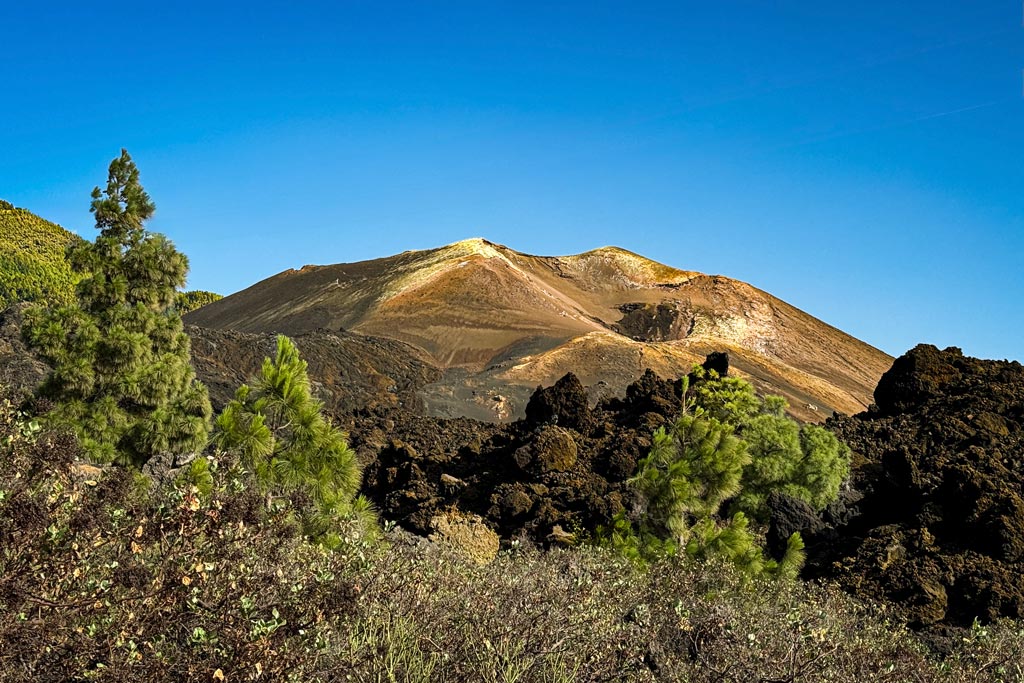
The Valle de Aridane was dramatically transformed when the volcán Tajogaite erupted on 19 September 2021. A symbol of the island’s recent history, this volcano created the youngest volcanic landscape in Spain.
To ensure visitor safety, access is regulated. So if you’d like to visit, you’ll need to book this guided tour. Accompanied by authorised guides who experienced every stage of the eruption, you’ll walk along a specially prepared path.
If you’d rather see it from a viewpoint, I recommend reading my 4-day road trip around La Palma, where I include some of the most important viewpoints.
3. Roque de los Muchachos
Do you know where the highest point in La Palma is? Roque de los Muchachos is one of the great natural balconies of the Canary Islands. From over 2,400 metres above sea level, you’ll enjoy jaw-dropping panoramic views of the island and, on clear days, of other islands such as Tenerife, La Gomera or El Hierro.
This area is world-famous for hosting one of the most important astronomical observatories on the planet. Thanks to its altitude, atmospheric stability and low light pollution, La Palma’s sky is considered one of the best in the world for stargazing.
Visiting Roque de los Muchachos at sunset and staying until nightfall is an unforgettable experience. The volcanic landscape, the silence and the starry sky make this one of the most magical places to see in La Palma.

4. Bosque de Los Tilos
The Bosque de Los Tilos is one of the great green treasures to visit in La Palma. This lush, humid laurel forest is a breath of fresh air among the island’s volcanic landscapes.
You really shouldn’t leave without visiting the Barranco del Agua. From the visitor centre, you can follow a lively path where giant ferns and laurel trees create an almost jungle-like atmosphere. In just ten minutes, you’ll reach a beautiful waterfall. Without a doubt, it’s one of the must-do experiences in La Palma.
Declared a Biosphere Reserve, this forest is perfect for switching off, breathing fresh air and snapping photos in one of the most photographed spots in La Palma.

5. Santa Cruz de La Palma
Santa Cruz de La Palma is one of the prettiest and most charming capitals in the Canary Islands. Its historic centre preserves elegant colonial architecture, with cobbled streets, peaceful squares and beautifully maintained historic buildings.
Don’t miss the wooden balconies along Avenida Marítima, unique in the archipelago. Make sure to stroll along Calle Real, Plaza de España and visit the Church of El Salvador too.
Alongside its heritage, Santa Cruz de La Palma also offers excellent food, events throughout the year and a welcoming atmosphere. Without a doubt, it’s another of the essential places to see in La Palma.

6. Charco Azul
Looking for the best natural pool in La Palma? I promise Charco Azul won’t disappoint you, especially when the sea is rough. With calm, crystal-clear water, these natural pools were carved directly into the volcanic rock, blending perfectly into the surroundings.
The area has several pools, sunbathing spots, snack bars and facilities, making it the best place to swim in La Palma. Whether you’re visiting with family, friends or on your own, this is a guaranteed winner.

7. Salinas y Faro de Fuencaliente
Located at the southern tip of the island, the Salinas de Fuencaliente are another must-see spot in La Palma. Now one of the most photographed places on the island, entry is free.
They are still producing salt by traditional methods today and are also an important natural and scientific site. Add this place to your list and enjoy a landscape unlike anywhere else on the island.
As night falls, the salt flats become one of the best places to watch the sunset in La Palma. The golden light reflects off the salt crystals, painting each salt pan in a different shade.
Extra tip: park your car near the lighthouse and follow the signposted route to visit the area.

8. Puerto y playa de Tazacorte
The Puerto de Tazacorte is known for being the sunniest place in La Palma. Its climate, seafront promenade and proximity to the ocean make it a perfect spot to enjoy good weather all year round.
Take the chance to book one of the best excursions in La Palma, such as this dolphin and whale-watching trip, or simply enjoy a walk along the beach. It’s also a great place to eat fresh fish right by the sea.
Sunsets at Puerto de Tazacorte are among the most beautiful on the island. An ideal spot for a refreshing swim and some well-earned rest after a long day exploring the greenest island in the Canary Islands.

9. Cascada de Colores
The Cascada de Colores is one of the most curious and surprising natural sights to see in La Palma. Located inside the Caldera de Taburiente, this small waterfall has gone viral thanks to the yellow, green and ochre tones colouring the rock.
These colours come from a high concentration of minerals, especially iron, which reacts with the water to create this beautiful natural postcard. While it’s not a large waterfall and can only be seen after rainfall, the real magic lies in the surrounding landscape.
The most common route passing this spot is the hike from Mirador de los Brecitos to the Barranco de Las Angustias. Along the way, you’ll also pass Hoyo Verde and Dos Aguas on an excursion that takes around six hours.
10. Mirador de La Cumbrecita
The Mirador de La Cumbrecita is one of the most impressive viewpoints overlooking the Caldera de Taburiente. From here, you’ll have a direct panoramic view into the heart of the caldera, with its ravines, pine forests and volcanic formations.
Getting to this viewpoint is easy. There’s a well-signposted circular trail with some incline, allowing you to enjoy Mirador Lomo de las Chozas and Mirador de Los Roques as well. It’s one of the best walks to do in La Palma if you’re short on time.
Do bear in mind that car access requires a permit. Make sure to book in advance, as places sell out quickly. Here’s the official website to make your reservation.

Map of Things to Do in La Palma
In conclusion
If you asked me which is the greenest island in the Canary Islands, I’d say La Palma without hesitation. The sense of calm you feel along its trails and volcanic natural pools is truly unique.
Its festivals, such as Los Indianos or the Fiesta de la Bajada de la Virgen de las Nieves, are also standout events you shouldn’t miss if you’re thinking of visiting La Palma.
If you’re planning a trip around the Canary Islands, combining La Palma with Tenerife or Gran Canaria is one of the best ways to experience very different landscapes within the same archipelago.


